Trademarks – Principal Register vs. Supplemental Register

memory-279904_1280

Some marks are not as strong as other marks, and certain marks that are not eligible for registration on the Principal Register, but are “capable” of one day distinguishing an applicant’s goods or services (such as descriptive terms) upon the acquisition of secondary meaning (proof that the mark has become distinctive as applied to the applicant’s goods or services in commerce), may be registered on the Supplemental Register.

Descriptive marks describe an ingredient, quality, characteristic, function, feature, purpose or use of the product or service.  Examples of descriptive marks include BANK OF AMERICA for a bank headquartered in the United States and WHOLE FOODS for a grocery store that sells health foods (both of which have since acquired distinctiveness and are now registered on the Principal Register).

Only marks actually used in commerce may be registered on the Supplemental Register, so an intent-to-use application is not eligible for registration on the Supplemental Register until the applicant has filed an acceptable allegation of use.

Benefits of Registration on the Supplemental Register

While not the preferred trademark register, registration on the Supplemental Register does provide the following benefits over purely common law rights (i.e., no registration at all):

  • Notice of the mark to anyone who searches the USPTO records.
  • Protection against third-parties registering confusingly similar trademarks at the USPTO.
  • Right to use the official registered trademark symbol “®” as notice of federal registration.
  • Right to sue infringers in federal court and have federal law control key issues of validity, ownership, infringement, injunctions and damages.
  • Ability to obtain foreign trademark protection in countries with international treaties.
  • After five years of usage and/or registration on the Supplemental Register, the registrant can apply for registration of the mark on the Principal Register.

Benefits of Registration on the Principal Register Not Applicable to the Supplemental Register

The following benefits of registration on the Principal Register are not enjoyed by registration on the Supplemental Register:

  • Constitutes prima facie evidence of the registrant’s exclusive right to use the mark nationwide.
  • Constitutes constructive notice of the registrant’s claim of ownership to eliminate the good faith defense.
  • Has a presumption of validity.
  • Carries a presumption that the registrant is the owner of the registered trademark.
  • May be filed with the United States Customs Service to prevent importation of infringing foreign goods.
  • Can become incontestable after five years of registration.

Acquired Distinctiveness/Secondary Meaning

A mark that is descriptive in nature and/or registered on the Supplemental Register cannot likely be registered on the Principal Register without a showing that the mark has become distinctive of the applicant’s goods or services in commerce, namely, that the mark has “acquired distinctiveness” or “secondary meaning.”

After five years of use or registration on the Supplemental Register, a statement verified by the applicant that the mark has become distinctive of the applicant’s goods or services by reason of substantially exclusive and continuous use in commerce by the applicant for the five years before the date when the claim of distinctiveness is made is usually sufficient to show acquired distinctiveness/secondary meaning.

However, depending on the nature of the mark and the facts in the record, the examining attorney may determine that a claim of ownership of a prior registration(s) or a claim of five years’ substantially exclusive and continuous use in commerce is insufficient to establish a prima facie case of acquired distinctiveness. The mark owner may then submit actual evidence of acquired distinctiveness.

The amount and character of evidence required to establish acquired distinctiveness depends on the facts of each case and particularly on the nature of the mark sought to be registered.

To support the claim of acquired distinctiveness, a mark owner may respond by submitting additional evidence. Such evidence may include specific dollar sales under the mark, advertising figures (or indicating the types of media through which the goods and services have been advertised (e.g., national television) and how frequently the advertisements have appeared), samples of advertising, consumer or dealer statements of recognition of the mark as a source identifier, affidavits, and any other evidence that establishes the distinctiveness of the mark as an indicator of source.  So, if you are using a descriptive mark, it is wise to keep these requirements in mind and keep track of this information so it is available if needed.

If additional evidence is submitted, the following factors are generally considered when determining acquired distinctiveness: (1) length and exclusivity of use of the mark in the United States by the applicant; (2) the type, expense and amount of advertising of the mark in the United States; and (3) the applicant’s efforts in the United States to associate the mark with the source of the goods or services, such as unsolicited media coverage and consumer studies.  A showing of acquired distinctiveness need not consider all these factors, and no single factor is determinative.

 

What’s in a (Brand) Name?

writing brand concept

Choosing a name for your company, creative project, product or service is just as important as (and often more difficult than) naming a child or pet. Brands are so important that many big companies spend hundreds of thousands of dollars and months or even years on research, focus group testing and the like in attempts to find just the right name or logo for a new product or service.

Your brand distinguishes your products and services from your competitors’ products and services. But a brand is much more than just a name or logo.  Your brand also serves as a symbol of the quality, value, and reputation which customers and fans expect in products you sell and services you provide…not to mention the emotional connection customers and fans can develop with your brand.  For example, if we’re talking about driving a Beetle or listening to The Beatles, you probably don’t just think “car” or “band.”  Instead, you likely have thoughts and emotions related to your experiences with and perceptions of those brands — whether positive or negative.

With so much at stake, choosing a name that will resonate with your customers and fans and convey information about your product or service is important.  When brainstorming a name for your company, creative project, product or service, remember that not all brands are created equal … particularly when it comes to trademark protection.

Brands — also known as Trademarks (used on products) and Service Marks (used in connection with services) — include any word, name, symbol, or device, or any combination of these, used, or intended to be used, in commerce to identify and distinguish the goods or services of one entity from those sold or provided by others, and to indicate the source of the goods or services. Trademarks can include entity names, product names, logos, domain names, 800 numbers, slogans, phrases and tag lines, character names, band names, jingles, and trade dress, such as product configurations, color, packaging and store designs.  

The best marks are memorable, appealing and elicit desired responses.  The ultimate goal should be to find a mark that is uniquely yours — a mark that is not confusingly similar to an existing mark used for similar products or services (i.e., someone else beat you to the punch), one that suggests some connection with another organization or famous person, or one that consists of a person’s last name.  And it can take a village of marketing, artistic, business and legal types to find that perfect mark.

While searching for that perfect mark, you should keep in mind that some marks are stronger than others…

  • Generic terms are common names for products or services, such as SALT when used in connection with sodium chloride or THE CHOCOLATIER for a store providing chocolate candy.  These terms can never be protected as trademarks.
  • Descriptive marks describe an ingredient, quality, characteristic, function, feature, purpose or use of the product or service, such as SALTY used in connection with crackers or DALLAS.COM for a website providing tourism information about Dallas.  These marks are not initially protectable unless the owner can show that the mark has gained “secondary meaning” or “acquired distinctiveness” (proof that the mark has become distinctive of the mark owner’s goods or services) in the marketplace over time through extensive and substantially exclusive use.
  • Suggestive marks suggest some characteristic or nature of the product or service and require imagination, thought or perception to reach a conclusion as to the nature of those products or services, such as COPPERTONE for suntan lotion or BLOCKBUSTER for a video rental store. Although there can be a fine line between descriptive and suggestive marks, suggestive marks are automatically protected as trademarks because they are “inherently distinctive.”
  • Arbitrary marks are very strong marks because they have no relation to the product or service, such as APPLE for computers.   However, because these are real words, other companies may have also adopted the words as marks, such as APPLE VACATIONS.
  • Fanciful/coined marks are the strongest marks because they are made up words, such as XEROX for copiers or EXXON for gasoline, and consumers only associate the mark owner with selling that service or product.  

From a trademark protection perspective, fanciful/coined, arbitrary or suggestive marks are preferable to descriptive (protectable with acquired distinctiveness) or generic (never protectable) marks.  Many company, product and service names tend to be descriptive or suggestive because business owners attempt to quickly choose names that help consumers easily identify their products or services.  However, the more creativity you use in the naming process, the stronger the mark and the more likely you are to prevent third parties from being able to use the same or similar mark on similar (or even unrelated) products and services.

Before using or registering a name for your services or products, you should, at the very least, perform a quick “knockout” availability search to see if a third party may already be using the same or similar mark in connection with the same or similar products or services.  You should:

  • Check for entity names and state trademark registrations with Secretary of State Offices where business will be done.
  • Search the U.S. trademark database.
  • Perform a Google search to determine whether third parties have common law rights to the name.
  • Perform a WHOIS search to determine whether domain names are available (as brands typically want a corresponding web presence).

A mark is one of the most important words, phrases or designs you will use to represent your products or services to the world.  Although selecting a name may seem simple, trademark law is very nuanced and is often much more complex than it appears. Therefore, I believe it is a wise investment of resources to engage a trademark attorney to perform more sophisticated searches to determine whether your mark is available and inform you as to the potential risks associated with use and/or registration of your proposed mark.  (Note:  You can save yourself some time and money by performing knockout searches for your potential marks before asking an attorney to search a particular mark more thoroughly.)

Choosing a mark that’s already being used by a third party can result in cease and desist letters and trademark infringement lawsuits…potentially requiring you to abandon use of the mark, destroy all products and materials that depict the mark, and potentially even paying the third party mark owner profits gained from infringing uses of a mark as well as damages the mark owner may have incurred from such infringing use.  The last thing you want to do after spending a bunch of money to print business cards, stationery, packaging, advertising and goodness knows what else emblazoned with your mark is having to scrap everything and start from scratch with another mark.

Hiring a lawyer to guide you during the mark selection process can save you (potentially hundreds of) thousands of dollars and several headaches down the road.


Unusual Trademarks Hiding in Plain Sight

Most people usually think of a trademark as a word, slogan or logo associated with a specific company, creative project, product or service (and often the quality of the products or services).  For example, some people strongly prefer consuming soft drinks labeled 220px-Pepsi_logo_svg  as opposed to coke-logo-1, while others would only buy tennis shoes marked with Nikeinstead of Adidas_Logoor logo_REEBOK_ICON_1 , and some may prefer this band  Rolling-Stones-Wallpaper-classic-rock-17732124-1024-768 to this one grateful_dead_bear-265x300.  However, a trademark can consist of almost anything that is used to identify and distinguish the goods or services of one entity from those manufactured, sold or provided by others. You might have a mark worthy of protection and don’t even realize it.  Perhaps your mark:

Sounds like a trademark…

There are registered marks for chimes, sayings associated with animated characters, and even theme songs.  Universal TV LLV has a registration that consists of “two musical notes, a strike and a rapid rearticulation of a perfect fifth pitch interval, which in the key of C sounds the notes C and G, struck concurrently” used in connection with the “entertainment services, namely, a series of on-going dramatic television programs”…although you probably know it better as the NBC Chimes.

Whether or not you eat carbs, you are likely familiar with the Pillsbury Doughboy.  If you’re reading this blog, you would likely recognize Yahoo!  And you might get excited when you hear this from your computer.  If you use a sound in connection with your products or services that (1) does not serve any functional purpose in connection with the products or services, (2) is not a natural by-product of the products or services, and (3) is not used by competitors or applicant’s industry in connection with the goods or services, you likely have something distinctive that consumers will associate with your products or services.  For more examples of sound marks, click here.

Smells like a trademark…

If Smead Manufacturing made apple cider, peppermint, vanilla, peach, lavender, and grapefruit scented lotion, they probably couldn’t protect the fragrance because it would be considered to serve a utilitarian purpose and be functional in connection with the product…but it’s a different story when those scents are used in connection with “office supplies, namely, file folders, hanging folders, paper expanding files.”  And, if you don’t like the smell of regular “medicated transdermal patches for the temporary relief of aches and pains of muscles and joints associated with arthritis, simple backaches, strains, bruises and sprains,” then you may want to try some that have “a minty scent by mixture of highly concentrated methyl salicylate (10wt%) and menthol (3wt%)”.

Looks like a trademark…

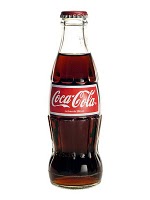
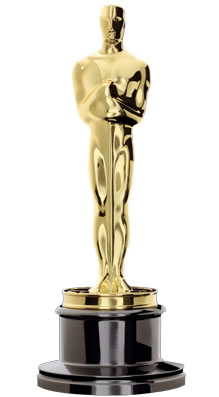
I don’t know of many women who wouldn’t immediately recognized a box or bag in a specific “shade of blue often referred to as robin’s-egg blue” as coming from the famous jeweler Tiffany & Co. The color pink for “foam insulation for use in building and construction” is registered to Owens-Corning Fiberglas Technology Inc. Of course, Coca-Cola has protected its iconic bottle designCoke_Bottle for decades…and the Oscar award statuetteAcademy_Award_trophyis also protected.

Feels like a trademark…

American Wholesale Wine & Spirits, Inc. has a mark which consists of “a velvet textured covering on the surface of a bottle of wine” for use in connection with wines.

Tastes like a trademark…????

Not yet…and potentially never.  The Trademark Trial and Appeal Board has observed that it is unclear how a flavor could function as a source indicator because flavor or taste generally performs a utilitarian function, and consumers generally have no access to a product’s flavor or taste prior to purchase.  In re N.V. Organon, 79 USPQ2d 1639 (TTAB 2006) (affirming refusal to register “an orange flavor” for “pharmaceuticals for human use, namely, antidepressants in quick-dissolving tablets and pills,” on the grounds that the proposed mark was functional under §2(e)(5) and failed to function as a mark within the meaning of §§1, 2, and 45 of the Trademark Act.).

Obtaining registration for some of these more unusual marks (usually categorized as trade dress) are more likely to require a showing of evidence of “acquired distinctiveness” (proof that the mark has become adequately associated in consumers’ minds with the mark owner’s goods or services) than more traditional marks.  However, don’t let that discourage you.  By opening your mind and looking for marks outside of the traditional name, logo or slogan categories, you just may find a sound, color, scent or other sensory trigger that strongly appeals to your customers or fans and turns out to be something that helps you stand out from the crowd and gets you a step ahead of the competition.


Misleading and Unsolicited Trademark Service and Fee Requests

Filing a trademark application in the United States or a foreign country typically results in trademark owners receiving unsolicited notices, invoices, and other communications from U.S. and foreign companies requesting fees for trademark-related services, such as trademark monitoring and document filing.  Although these documents and invoices often look “official” and contain customer-specific information (such as the trademark serial or registration number and owner name), companies that offer these services are not affiliated or associated with the United States Patent and Trademark Office (“USPTO”) or any other federal agency.car-44144_1280

If you receive an invoice related to your trademarks, you should verify its authenticity with your trademark attorney, the World Intellectual Property Organization (WIPO) or the Intellectual Property Office through which your mark is registered before remitting payment and to discuss your options in more detail.

Unless the communication comes directly from (1) the USPTO, (2) a foreign trademark agency equivalent, or (3) your trademark attorney, these notices and invoices are likely unsolicited third party advertisements for services that you may not need or that may not provide you with adequate protection for your trademarks.  The USPTO and the WIPO have issued warnings related to these unsolicited requests for payment of fees.  WIPO has databases containing samples of misleading invoices and similar announcements issued by various countries.

You may file a complaint about these types of solicitations with the Federal Trade Commission (FTC).


How to Protect Titles of Creative Works

Although movies, TV shows, art, books, musibooks-498422_1280c, lyrics and recordings are protected by copyright, the titles, names and tag lines associated with these types of creative works do not qualify for copyright protection. However, in certain instances, titles of creative works may be protectable as trademarks.

For example, you cannot register a trademark for the title, or a portion of a title, of a single creative work (such as a book, a television episode, a film, a live theatre production, or a phonograph record).  [NOTE: Computer software and computer games are not treated as single creative works.]

However, if the title has been (or will be) used in connection with a series of creative works (e.g., a series of books, the second edition of a book with significant changes, a periodically issued magazine, a television or movie series, a series of live performances [such as by a musical artist], educational seminars, or a continuing radio program), it may constitute a mark for either entertainment or educational services.

For more information about how to protect titles, here’s an article I wrote entitled A Different Kind of Title Insurance: How to Protect Titles of Creative Works that was published in Bloomberg BNA’s Patent, Trademark and Copyright Journal.


Intellectual Property Overview

Here’s a quick overview about copyrights, trademarks, patents and other types of intellectual property…

COPYRIGHTS –iStock_000040071288Medium Copyrights protect creative works.

Technically, copyrights protect “original works of authorship” that are “fixed in any tangible medium of expression,” such as literary and musical works; pictorial, graphic, and sculptural works; computer software; motion pictures and other audiovisual works; sound recordings; and architectural works. Copyright protection exists from the moment the work is written down, recorded, photographed, etc.

Copyright protection usually lasts for the life of the author plus 70 years. Copyrights are protected by U.S. federal law (17 U.S.C. § 101 et seq.) and international treaty. (Note: You do not have to file for a copyright registration to have federal copyright protection…but there are several advantages to obtaining a registration.)  For more information, visit www.copyright.gov.

TRADEMARKS – Trademarks are brand names and logos that are used on products or in connection with services.

A trademark is a word, phrase, name, slogan, tagline, logo, domain name, symbol, device, or any combination of these, which is used (or intended to be used) in commerce to identify and distinguish the goods or services of one entity from those sold or provided by others, and to indicate the source of the goods or services. A trademark also stands as a symbol of the quality which people expect in products sold and services provided in connection with a mark.

Trademarks can include trade names, logos, domain names, 800 numbers, advertising slogans, jingles, and store designs.

Trademark protection can last as long as a mark is used in commerce. Trademarks are protected by common law, state law, U.S. federal law (15 U.S.C. §§ 1051-1141n) and the laws of individual foreign countries. For more information, visit http://www.uspto.gov/.

Service Marks – A service mark is basically the same as a trademark except that it identifies a service instead of a product. For practical purposes, the same rules apply to service marks as apply to trademarks.

Trade Dress – A product’s trade dress, which includes product features and configurations such as shape, texture, size, color and packaging, may also be protected if it is “nonfunctional.” A feature is functional if it is necessary to a product’s utility, or affects its cost and/or method of manufacture. However, if other, different physical features can perform the same function without sacrificing a functional advantage, the design may be considered nonfunctional.

Trade Names – A trade name is the name under which an entity does business, such as Bell Nunnally & Martin LLP.  A trade name encompasses the reputation of the entire business while trademarks and service marks identify specific products and services sold by that business. No particular notice or usage is required for trade names.  It is usually not proper to use the trademark symbol with the trade name.

PATENTS – Patents protect inventions and improvements to existing inventions.

A patent is a property right granted to an inventor by the government.  Patents can be granted to anyone who “invents or discovers any new and useful process, machine, manufacture, or composition of matter, or any new and useful improvement thereof.” Patents confer the right “to exclude others from making, using, offering for sale, or selling” the invention in or “importing” the invention into the U.S. for a limited time in exchange for public disclosure of the invention when the patent is granted.

Utility Patents – A utility patent covers an invention of a new and useful process, machine, article of manufacture, or composition of matter, or any new and useful improvement thereof.  (Protection lasts 20 years from patent application filing date.)

Design Patents – A design patent covers a new, original, and ornamental design for an article of manufacture.  (Protection lasts 14 years from date patent issues.)

Patents are protected by U.S. federal law (35 U.S.C. § 1 et seq.) and the laws of individual foreign countries. For more information, visit http://www.uspto.gov/.

TRADE SECRETS – A trade secret generally includes any information that derives independent economic value from not being generally known or reasonably ascertainable, and is the subject of reasonable efforts to maintain its secrecy.

Trade secret protection can last as long as the secret is kept. Trademarks are protected by common law, state law (most states follow the Uniform Trade Secret Protection Act), U.S. federal law (18 U.S.C. § 1839(3)) and the laws of individual foreign countries.  Practically, trade secrets are usually maintained through nondisclosure and noncompete agreements.