Here’s a quick overview about copyrights, trademarks, patents and other types of intellectual property…
COPYRIGHTS – Copyrights protect creative works.
Technically, copyrights protect “original works of authorship” that are “fixed in any tangible medium of expression,” such as literary and musical works; pictorial, graphic, and sculptural works; computer software; motion pictures and other audiovisual works; sound recordings; and architectural works. Copyright protection exists from the moment the work is written down, recorded, photographed, etc.
Copyright protection usually lasts for the life of the author plus 70 years. Copyrights are protected by U.S. federal law (17 U.S.C. § 101 et seq.) and international treaty. (Note: You do not have to file for a copyright registration to have federal copyright protection…but there are several advantages to obtaining a registration.) For more information, visit www.copyright.gov.
TRADEMARKS – Trademarks are brand names and logos that are used on products or in connection with services.
A trademark is a word, phrase, name, slogan, tagline, logo, domain name, symbol, device, or any combination of these, which is used (or intended to be used) in commerce to identify and distinguish the goods or services of one entity from those sold or provided by others, and to indicate the source of the goods or services. A trademark also stands as a symbol of the quality which people expect in products sold and services provided in connection with a mark.
Trademarks can include trade names, logos, domain names, 800 numbers, advertising slogans, jingles, and store designs.
Trademark protection can last as long as a mark is used in commerce. Trademarks are protected by common law, state law, U.S. federal law (15 U.S.C. §§ 1051-1141n) and the laws of individual foreign countries. For more information, visit http://www.uspto.gov/.
Service Marks – A service mark is basically the same as a trademark except that it identifies a service instead of a product. For practical purposes, the same rules apply to service marks as apply to trademarks.
Trade Dress – A product’s trade dress, which includes product features and configurations such as shape, texture, size, color and packaging, may also be protected if it is “nonfunctional.” A feature is functional if it is necessary to a product’s utility, or affects its cost and/or method of manufacture. However, if other, different physical features can perform the same function without sacrificing a functional advantage, the design may be considered nonfunctional.
Trade Names – A trade name is the name under which an entity does business, such as Bell Nunnally & Martin LLP. A trade name encompasses the reputation of the entire business while trademarks and service marks identify specific products and services sold by that business. No particular notice or usage is required for trade names. It is usually not proper to use the trademark symbol with the trade name.
PATENTS – Patents protect inventions and improvements to existing inventions.
A patent is a property right granted to an inventor by the government. Patents can be granted to anyone who “invents or discovers any new and useful process, machine, manufacture, or composition of matter, or any new and useful improvement thereof.” Patents confer the right “to exclude others from making, using, offering for sale, or selling” the invention in or “importing” the invention into the U.S. for a limited time in exchange for public disclosure of the invention when the patent is granted.
Utility Patents – A utility patent covers an invention of a new and useful process, machine, article of manufacture, or composition of matter, or any new and useful improvement thereof. (Protection lasts 20 years from patent application filing date.)
Design Patents – A design patent covers a new, original, and ornamental design for an article of manufacture. (Protection lasts 14 years from date patent issues.)
Patents are protected by U.S. federal law (35 U.S.C. § 1 et seq.) and the laws of individual foreign countries. For more information, visit http://www.uspto.gov/.
TRADE SECRETS – A trade secret generally includes any information that derives independent economic value from not being generally known or reasonably ascertainable, and is the subject of reasonable efforts to maintain its secrecy.
Trade secret protection can last as long as the secret is kept. Trademarks are protected by common law, state law (most states follow the Uniform Trade Secret Protection Act), U.S. federal law (18 U.S.C. § 1839(3)) and the laws of individual foreign countries. Practically, trade secrets are usually maintained through nondisclosure and noncompete agreements.

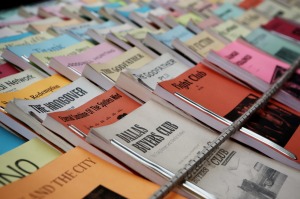 c, lyrics and recordings are protected by copyright, the titles, names and tag lines associated with these types of creative works do not qualify for copyright protection. However, in certain instances, titles of creative works may be protectable as trademarks.
 I'M WITH THE B(R)AND®