Endorsements and Testimonials: Are You Following the Rules?

Does your company use endorsements or testimonials to promote its products or services on its website or in its advertising or marketing materials?  Do you allow customers to post on your social media pages or website?  Are you a blogger who reviews products or services?

When most people hear the words endorsement or testimonial, they likely imagine a celebrity or expert getting paid big bucks to talk about an “amazing” product or service.  And, they would be right.

However, if you answered “yes” to any of the questions above, then you likely need to comply with the Endorsement and Testimonial Guides issued by the Federal Trade Commission (“FTC”).

Examples of messages that constitute endorsements include a film critic’s review of a movie used in Excellent result on survey on blackboardan advertisement for the film, a well-known athlete using a certain brand of sporting equipment in an ad for that brand, and a positive product review posted by a consumer on her personal blog where the consumer received the product free as part of a network marketing program.

The Guides reflect three basic truth-in-advertising principles:

  1. Endorsements must be truthful and not misleading;
  2. If the advertiser doesn’t have proof that the endorser’s experience represents what consumers will achieve by using the product, the ad must clearly and conspicuously disclose the generally expected results in the depicted circumstances; and
  3. If there’s a connection between the endorser and the marketer of the product that would affect how people evaluate the endorsement, it should be disclosed.

In other words, endorsements:

  1. Must reflect the honest experience or opinion of the endorser (there are different rules for consumer, celebrity and expert endorsements, as well as for endorsements by organizations);
  2. May not contain representations or claims that would be deceptive, or could not be substantiated, if the advertiser made them directly; and
  3. Must disclose any material connection between the person endorsing a product or service and the company selling the product or service that might materially affect the weight or credibility of the endorsement (employee, relative, paid, etc. – even small incentives, such as free product for bloggers to sample, must be disclosed).

Although the Guides don’t mandate the specific wording of disclosures, the Guides states that disclosures “must be clear and conspicuous on all devices and platforms that consumers may use to view the ad”…even if there are only 140 characters available for the entire message.  For example, paid spokespeople must disclose that they are sponsored (#sponsored or #ad) or explicitly mention that they are working with the brand/company (e.g., I’m teaming up with [brand/company] to do X) on social media platforms, such as Twitter.

If you are a brand owner, use caution before you follow, friend, like, or engage with a celebrity, third-party trademark or brand. Do not imply that there is an affiliation between the brand/company and the user/celebrity/trademark/etc….especially when such a relationship doesn’t exist. (Most consumers will assume there is a relationship between the brand/company and the user/celebrity/trademark.)

For more information, see the FTC’s FAQs about endorsements and testimonials.

 

Controlling Your Domain (Name) to Avoid a Domain Name Fumble

Next week’s NFL Draft brings to mind a cautionary tale…

It could happen to any of us, and it almost happened to the Dallas Cowboys at a crucial time.  In the middle of the 2010 NFL season, buzz surrounding whether Cowboys’ head coach Wade Phillips was going to be fired (which was ultimately the case) was at an all-time high.  No doubt, fans, rivals and press were all scouring the internet for updates on the situation, and the Cowboys’ website was probably the prime online destination of the day. Unfortunately, the team forgot to renew the dallascowboys.com domain, and many would-be site visitors got error screens instead of highlights and instant replays. Talk about a game-changing fumble! See related article here.Blue Url Words Shows Org Biz Com Edu

It’s worth noting that the dallascowboys.com domain name was originally purchased in 1995 and probably was reserved for the longest possible time allowed.  Although most domain name registrars timely send email renewal reminders to domain name owners, it’s likely that whomever was initially responsible for the domain name was long gone and the renewal information didn’t get forwarded to the proper person (and, although auto-renew is available, the credit card info on file with the domain name registrar was probably no longer valid as well). It’s lucky that the ‘Boys became aware of the problem (which you might call an incomplete pass) and quickly renewed the domain before someone else (perhaps a disgruntled, recently fired coach) grabbed it and tried to hold it hostage.

At least Dallas Cowboys Football Club, Ltd. was listed as the domain name owner.  Many times, the person who originally registers the domain name (whether an employee of the organization or someone with the company hired to design the website) is listed as the owner of the domain name and the domain name is never officially transferred to the organization and/or the information doesn’t get updated…which can cause a host of problems for the organization utilizing the domain name (especially if the employee is terminated or if the development company relationship dissolves).

Although the Cowboys had a close call and almost wound up on the disabled list, this is a great example of how easy it can be for an organization to neglect (and almost lose) one of its most important intellectual property assets. We all know how valuable your website is to your business, so here’s what you should do to prepare your domain name offensive strategy…

If you have a website: 

(1)   Determine who is listed as the owner of your domain name.

To find out who owns your domain name and when the registration expires, type in the domain name (e.g., dallascowboys.com) in a WHOIS search database, such as InterNIC, Network Solutions, or GoDaddy.

(2)   Check to ensure that this information is correct. 

If the Administrative and/or Technical Contact information is not in your company’s name, you’ll want to update this information as quickly as possible.

You may need a Domain Name Transfer Agreement to perfect the chain of title for the domain name ownership.  (While you’re at it, you may also want to make sure you have a Website Development Agreement in place with any third-party web developer for the website associated with the domain name so you own/have rights to your web content and design.)

If the domain name is registered to one of your company’s employees or officers, add this to your employee exit checklist to ensure that this information is updated should the employee/officer leave the company.

A disgruntled/terminated employee or website developer with sole control of a company domain name can easily redirect internet, e-mail and intranet traffic within a matter of moments and bring business to a standstill.

(3)   Calendar a reminder for the domain name renewal date.  

The expiration date for the domain name registration is listed in the WHOIS information (see #1 above).


Unusual Trademarks Hiding in Plain Sight

Most people usually think of a trademark as a word, slogan or logo associated with a specific company, creative project, product or service (and often the quality of the products or services).  For example, some people strongly prefer consuming soft drinks labeled 220px-Pepsi_logo_svg  as opposed to coke-logo-1, while others would only buy tennis shoes marked with Nikeinstead of Adidas_Logoor logo_REEBOK_ICON_1 , and some may prefer this band  Rolling-Stones-Wallpaper-classic-rock-17732124-1024-768 to this one grateful_dead_bear-265x300.  However, a trademark can consist of almost anything that is used to identify and distinguish the goods or services of one entity from those manufactured, sold or provided by others. You might have a mark worthy of protection and don’t even realize it.  Perhaps your mark:

Sounds like a trademark…

There are registered marks for chimes, sayings associated with animated characters, and even theme songs.  Universal TV LLV has a registration that consists of “two musical notes, a strike and a rapid rearticulation of a perfect fifth pitch interval, which in the key of C sounds the notes C and G, struck concurrently” used in connection with the “entertainment services, namely, a series of on-going dramatic television programs”…although you probably know it better as the NBC Chimes.

Whether or not you eat carbs, you are likely familiar with the Pillsbury Doughboy.  If you’re reading this blog, you would likely recognize Yahoo!  And you might get excited when you hear this from your computer.  If you use a sound in connection with your products or services that (1) does not serve any functional purpose in connection with the products or services, (2) is not a natural by-product of the products or services, and (3) is not used by competitors or applicant’s industry in connection with the goods or services, you likely have something distinctive that consumers will associate with your products or services.  For more examples of sound marks, click here.

Smells like a trademark…

If Smead Manufacturing made apple cider, peppermint, vanilla, peach, lavender, and grapefruit scented lotion, they probably couldn’t protect the fragrance because it would be considered to serve a utilitarian purpose and be functional in connection with the product…but it’s a different story when those scents are used in connection with “office supplies, namely, file folders, hanging folders, paper expanding files.”  And, if you don’t like the smell of regular “medicated transdermal patches for the temporary relief of aches and pains of muscles and joints associated with arthritis, simple backaches, strains, bruises and sprains,” then you may want to try some that have “a minty scent by mixture of highly concentrated methyl salicylate (10wt%) and menthol (3wt%)”.

Looks like a trademark…

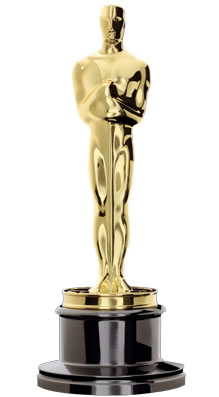
I don’t know of many women who wouldn’t immediately recognized a box or bag in a specific “shade of blue often referred to as robin’s-egg blue” as coming from the famous jeweler Tiffany & Co. The color pink for “foam insulation for use in building and construction” is registered to Owens-Corning Fiberglas Technology Inc. Of course, Coca-Cola has protected its iconic bottle designCoke_Bottle for decades…and the Oscar award statuetteAcademy_Award_trophyis also protected.

Feels like a trademark…

American Wholesale Wine & Spirits, Inc. has a mark which consists of “a velvet textured covering on the surface of a bottle of wine” for use in connection with wines.

Tastes like a trademark…????

Not yet…and potentially never.  The Trademark Trial and Appeal Board has observed that it is unclear how a flavor could function as a source indicator because flavor or taste generally performs a utilitarian function, and consumers generally have no access to a product’s flavor or taste prior to purchase.  In re N.V. Organon, 79 USPQ2d 1639 (TTAB 2006) (affirming refusal to register “an orange flavor” for “pharmaceuticals for human use, namely, antidepressants in quick-dissolving tablets and pills,” on the grounds that the proposed mark was functional under §2(e)(5) and failed to function as a mark within the meaning of §§1, 2, and 45 of the Trademark Act.).

Obtaining registration for some of these more unusual marks (usually categorized as trade dress) are more likely to require a showing of evidence of “acquired distinctiveness” (proof that the mark has become adequately associated in consumers’ minds with the mark owner’s goods or services) than more traditional marks.  However, don’t let that discourage you.  By opening your mind and looking for marks outside of the traditional name, logo or slogan categories, you just may find a sound, color, scent or other sensory trigger that strongly appeals to your customers or fans and turns out to be something that helps you stand out from the crowd and gets you a step ahead of the competition.


Is Coke’s Trade Secret Out of the Can?

stamp-143799_1280In early 2011, the public radio show This American Life created an international media frenzy when it revealed what it believed to be the original recipe for Coca-Cola.

The “secret formula” for Coca-Cola — which has been locked away in a bank vault at the Trust Company Bank in Atlanta since at least 1925 — is one of the most famous and highly guarded trade secrets in the world.  Supposedly, only two company executives know the recipe at any one time and they are never allowed to fly on an airplane together in case of a crash.  (For more on the rumors and lore surrounding Coke’s secret formula, visit urban myth-busing website Snopes.com.) So, after 125 years of secrecy, how did a public radio show get hold of such a well-protected and highly-coveted corporate gem?  Did This American Life break into the vault or kidnap and tickle-torture one of the two executives until he talked?  No.  They opened a newspaper.  Apparently, the photo used to illustrate the story published in The Atlanta Journal and Constitution on February 18, 1979, was a hand-written copy of (Coke’s inventor) John Pemberton’s recipe circa 1886.  Talk about adding insult to injury!

This American Life has clarified its position on the recipe printed in the paper, stating that it believes the recipe is Pemberton’s original recipe or a version of Coca-Cola that he made either before or after the product hit the market in 1886, and not the recipe used today.  Perhaps this is because they tested the recipe and determined that it wasn’t quite the same as the Coca-Cola we know today, and, of course, The Coca-Cola Company denies that the secret is out.

Although you may not go to quite the lengths taken by The Coca-Cola Company to protect your trade secrets, you should consider what measures (if any) you are taking to safeguard your “information, including a formula, pattern, compilation, program, device, method, technique or process that: (i) derives independent economic value, actual or potential, from not being generally known to, and not being readily ascertainable by proper means by other persons who can obtain economic value from its disclosure or use, and (ii) is the subject of efforts that are reasonable under the circumstances to maintain its secrecy.” (Definition from Uniform Trade Secrets Act.)

Trade secrets — which often include recipes, sales methods, distribution methods, consumer profiles, advertising strategies, lists of suppliers and clients, and manufacturing processes — provide an enterprise a competitive edge and can last for as long as they are kept secret.  So, you would never want to include your trade secrets in a copyright or patent application, as they will be disclosed once the application or registration is published.

Although whether something truly constitutes a trade secret will depend on the circumstances of each individual case, for something to qualify and be protected as a trade secret:

  • The information must be secret (i.e., it is not generally known among, or readily accessible to, circles that normally deal with the type of information in question).
  • It must have commercial value because it is a secret.
  • It must have been subject to reasonable steps by the rightful holder of the information to keep it secret (e.g., through confidentiality agreements).